
“Civilisation always consists in dressing oneself, not undressing.“ – Nicolás Gómez Dávila
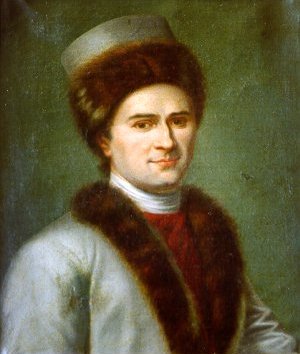
Of all his many faults, perhaps Rousseau’s greatest hypocrisy was on the matter of accoutrement. Here we have a man who, by all accounts, had a flair for fashion, extolling the virtues of the naked man. Nowhere is the difference between natural man and civilised man more visible than in the area of attire. The natural strength of the naked barbarian is no match for the clothed and civilised man, for only the latter can throw down the gauntlet or throw his hat into the ring.
At the root of Rousseau’s error lay a desire to have the Garden but to keep the Fall. That is, he wanted Man to return to Eden without renouncing the Fruit of Knowledge. What God shuts, however, none can open. The way is blocked by the blazing sword, and man is left with the blazer. That is, the splendour of the birthday suit was stained by the Fall, and now we don our gay apparel, for now we know our shame.
Adam and Eve hid themselves from the God in the Garden; now we must hide ourselves from the man in the street. We were made in God’s image, and since we chose not to behold Him, we are too ashamed to behold ourselves.
Yet this artifice itself became an art. If we could not behold each other as we truly were, we sought at least to appear worthy of being beheld. Loin cloths have become linen cloths, and fig leaves have become Hilfiger; in other words, our mourning dress has become morning dress.
Fashion is indeed a mode of self-expression, but also of political ambition. As Chesterton has remarked, no sooner do men desire to be taken seriously than they put on a skirt (whether Roman patricians or Romanist Popes). Conversely, no sooner did women renounce womanhood than they sought to wear men’s slacks. And on account of those who cross-dress, we all should wear sackcloth and ash.
But the fact remains that, where fashion was meant to conceal our shame, it has now become shameful itself. Formality was the first casualty of modernity. The problem, as Nicolás Gómez Dávila tells us, is not that the masses have bad taste, but that they haven’t got any taste at all. Gone are the days of Brummellian bombast, and the sun has set on the sartorial arts. To tell the truth, it were better to be naked than badly dressed, and, sadly, the Emperor’s new clothes are really rather bad.
Ironically, the casual is the new formal. To dress the part was once seen as humble. ‘Who am I that I should dare deviate from the prescribed norms?’ Our vulgar new age mistakes humbug for humility, and propriety for pride. Yet, as the Scholastics knew, form matters.
Perhaps Rousseau’s great adversary may provide the much-needed counterblast. Edmund Burke was a man of aesthetic sense who knew the limits of reason. In some ways, clothing is irrational, or at least pre-rational. Yet we wear it; not on account of our reason, but on account of our shame. For Man had reason before the Fall, but shame was in the Fruit. Angels and beasts wear nothing at all, but manners make the man. Thus, perhaps more than reason, the cloth is the mark of manhood. For sheep are content with sheepskin, but men don the fur of the fox.
 A Counterblaste